Showing posts with label Nanotechnology. Show all posts

Sunday, 13 October 2019

Nanopesticide: Future Application of Nanomaterials in Plant Protection


Nanopesticide: Future Application of Nanomaterials in Plant Protection


Crop Pests and diseases, and post harvest pests have significant impact on agricultural yield loss  and farmers’ incomes. Farmers mostly use synthetic pesticides to manage pests to maximize crop yields; posing potensial risks for workers, consumers and the environments.  Nanopesticides based on metal and essential oils, agrochemical control release formulation hold promise as less toxic pesticide and excellent alternative to convensional pesticide in plant pest and disease control.  Nanoparticles and nanoemulsions of metals, nanoemulsion of essential oils, and matrixs of delivery agents/ carrier in nano pesticide formulations; have been synthesized and their effectiveness assessed against plant pest insect and disease pathogen; and other aspects in plant protection.  This review discuss the main research of nanomaterials that have been  applied and highlights nanoformulation  technologies to be considered for their continuing development of nanopesticides from point of view of  plant protection. 
The chapter has been published in  the book 'Plant Nanobionics: Volume 2, Approaches in Nanoparticles, Biosynthesis and Toxicity" edited by Dr. Ram Prasad and published by Springer Nature.


Single-Particle Inductively Coupled Plasma Mass Spectrometry for Characterization of Engineered Nanoparticles


Single-Particle Inductively Coupled Plasma Mass Spectrometry for Characterization of Engineered Nanoparticles
With the rapid development of nanotechnology, consumer products containing metallic engineered nanoparticles (ENPs) are commonly available in the market. These particles subsequently are released into the environment, and uptake of these materials by human is very likely. Methods for detecting, quantifying, and characterizing these materials in complex matrices are critical for the eventual understanding of their implications to human health and environment. To assess their effect on the body, reliable and fast detection of these nanoparticles in very low amount becomes increasingly important. Single-particle ICP-MS has emerged (spICP-MS) as a useful tool for characterization of metal-containing nanoparticles. This technique is reliable and fast for counting and sizing particles at lowest concentrations while simultaneously distinguishing between dissolved and particulate analytes.

The chapter describing about this technique has been published in the book “Microbial Nanobionics” volume 2 Basic Research and Applications edited by  Dr. Ram Prasad.

Tuesday, 13 November 2018

Thursday, 6 July 2017

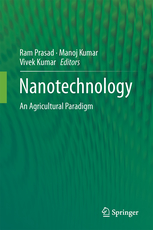
Nanotechnology: An Agricultural Paradigm

Nanotechnology: An Agricultural Paradigm

This book highlights the implications of nanotechnology and the effects of nanoparticles on agricultural systems, their interactions with plants as well as their potential applications as fertilizers and pesticides. It also discusses how innovative, eco-friendly approaches to improve food and agricultural systems lead to increased plant productivity. Further, it offers insights into the current trends and future prospects of nanotechnology along with the benefits and risks and their impact on agricultural ecosystems. Nanomaterials in agriculture reduce the amount of chemical products sprayed by means of smart delivery of active ingredients; minimize nutrient losses in fertilization; and increase yields through optimized water and nutrient management. There is also huge potential for nanotechnology in the provision of state-of-the-art solutions for various challenges faced by agriculture and society, both today and in the future.
Title
Nanotechnology: An Agricultural Paradigm
Editors
Edition
illustrated
Publisher
Springer Singapore, 2017
ISBN
9811045720, 9789811045721
Length
371 pages

17 June 2017
DOI: 10.1007/978-981-10-4573-8_11


Chapter 11

Nanotechnology for Enhancing Crop Productivity

·        Suresh Kaushik and Setyowati Retno Djiwanti

Page: 249-262


Thursday, 13 April 2017

Deciphering the mode of interactions of nanoparticles with mung bean (Vigna radiata L.)


Deciphering the mode of interactions of nanoparticles with mung bean (Vigna radiata L.)


Himanshu Mahawar, Radha Prasanna, Kaur Simranjit, Shobit Thapa, Amrita Kanchan, Rajendra Singh, Suresh Chand Kaushik, Surender Singh & Lata Nain (2017):


Israel Journal of Plant Sciences, DOI: 10.1080/07929978.2017.1288516

To link to this article: http://dx.doi.org/10.1080/07929978.2017.1288516


Deciphering the mode of interactions of nanoparticles with mung bean (Vigna radiata L.): (2017).
.

Thursday, 30 March 2017

Deciphering the mode of interactions of nanoparticles with mung bean (Vigna radiata L.)


An investigation was undertaken to analyze the effect of four different metal nanoparticles (ZnO,
SiO2, Fe2O3 and MgO) on the growth of mung bean (Vigna radiata L.) plants. Agar overlay method using seedling nutrient medium containing 50 and 100 mg/l of each of the nanoparticles (NPs) was used for the study undertaken for 28 days. A concentration-dependent increase in fresh weight and carotenoid concentration was recorded in MgO NPs. ZnO NPs showed the highest enhancement in leaf peroxidase activity over control. Heavy metal analysis by ICP-MS of seedlings at both concentrations of NPs for 28 days showed a twofold increase at the higher concentrations with ZnO and Fe2O3 NPs. Visual and SEM observations of the MgO NP-treated roots revealed an increase in density and fibrosity, with unique globular structures on the surface of the roots. MgO nanoparticles–mung bean interaction can be a model system for investigating beneficial interactions of nanoparticles with plants.


http://www.tandfonline.com/eprint/sK5DBPt6TCCq9R9NW8FS/full

Tuesday, 8 November 2016

Nano GPS chips in currency notes to curb black money

The Prime Minster of India, Shri Narendra Modi on 8th November, 2016 (Tuesday) announced that the Rs 500 and 1,000 notes will be invalid from the midnight. This means the new Rs 500 and Rs 2,000 notes would be in circulation and as per the RBI the same would be out by November 10th. It is because there are lot of fake 500 and 1000 currency notes in the market and it is causing endless problems for RBI to confiscate all of them. The best way is to introduce a new currency denomination which is difficult to create replicas. The Reserve Bank of India (RBI) will be issuing Rs 2,000 currency notes, the highest to come into circulation. This was supposed to be one of the biggest news for banking sector, financial institutions and the common man – because it involved India’s largest currency denomination, Rs 2000. In 1938, and then again in 1954, then Governments introduced currency denomination of Rs 10,000 which was later put out of circulation in 1946 and 1978 respectively. If we leave aside Rs 10,000 currency, then Rs 2000 would be the largest denomination in the history of India. Soon after reports emerged that Rs 2000 currency notes would be introduced by RBI, another set of rumors emerged that these notes would be embedded with nano-GPS chips which can be traced all over the world. The Rs 2000 currency is designed keeping in mind to eradicate the black money issues using state of the art indigenous nanotechnology, every Rs. 2000 currency note is embedded with a NGC (Nano GPS Chip). The unique feature of the NGC is it doesn’t need any power source. It only acts as a signal reflector. When a Satellite sends a signal requesting location the NGC reflects back the signal from the location, giving precise location coordinates, and the serial number of the currency back to the satellite, this way every NGC embedded currency can be easily tracked & located even if it is kept 120 meters below ground level. The NGC can’t be tampered with or removed without damaging the currency note. Since every NGC embedded currency can be tracked. The satellite can identify the exact amount of money stored at a certain location. If a relatively high concentration of currency is found a certain location for a longer period of time at suspicious locations other than banks & other financial institutions. The information will be passed on to the Income Tax Department for further investigation and action. As the new notes are loaded with nano-GPS chips (NGC) which will enable the Govt. to easily track these notes, hence controlling black money transactions. NGC chips are actually ‘signal-reflectors’ which would help satellites to track the location of the notes – even if they are ‘120 meters’ below ground level. The logic is that, the satellites will track heavy accumulation of such NGC enabled notes, and will take immediate action to track and seize such money (assuming they are black money).

notes
stardust